October 31, 2026
How Security Technology Is Changing Florida Security Work
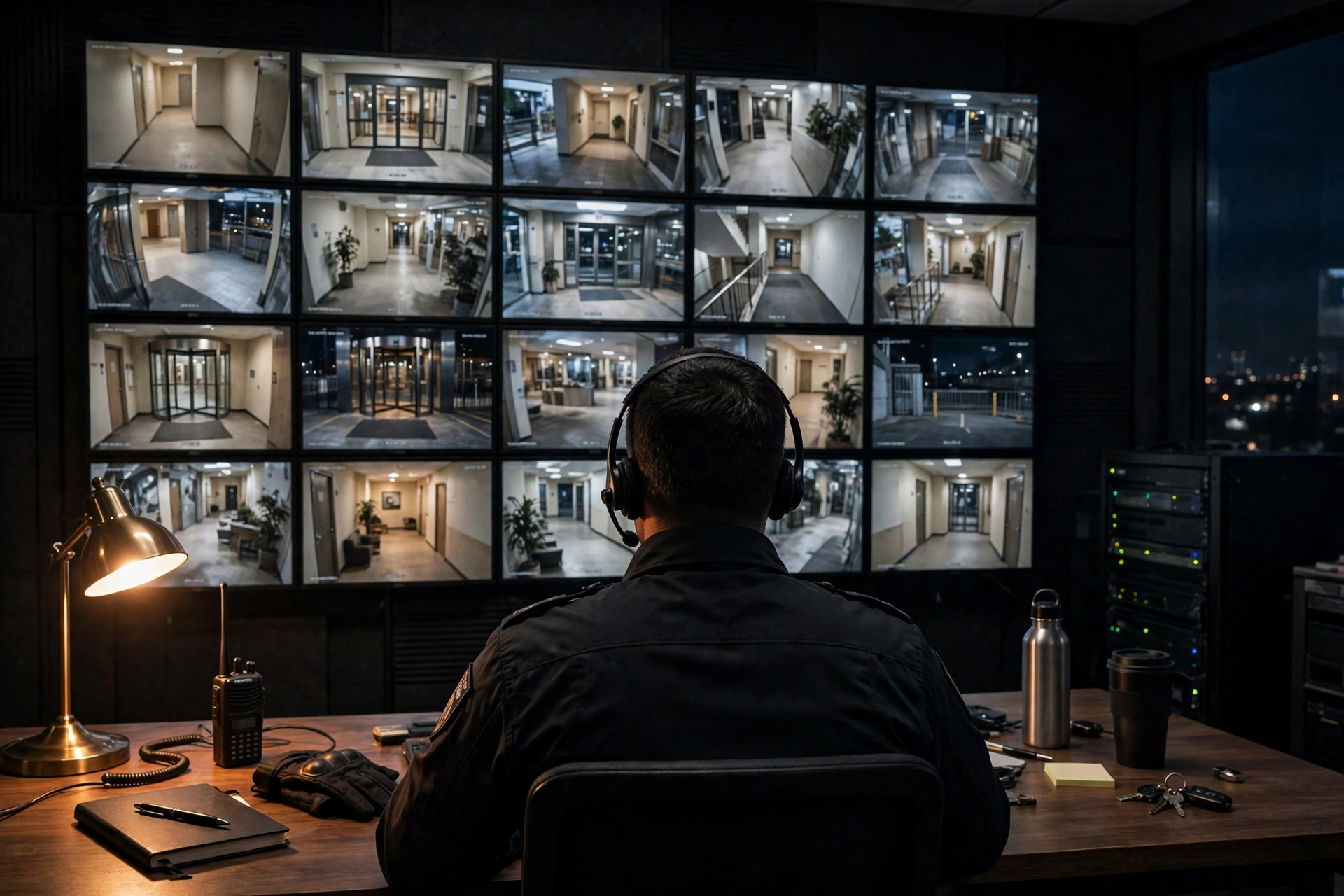
When I started working security, a camera was mostly a recorder. Something happened, and afterwards someone would rewind the footage and try to work out what went wrong. That is still part of the job, but it is no longer the whole job. Today, cameras, access control, and remote monitoring are changing security work in Florida, in hotels, hospitals, stores, residential communities, and ports.
I am writing this as a licensed Florida security professional. I hold a Florida Class D unarmed license and a Class G armed license, I work in loss prevention, and I hold a TWIC card for port-related work. Technology has changed my tools, but it has not changed the core of the job: protecting people and property, making good decisions under pressure, and writing clear, honest reports. If you are thinking about a security career, or you manage a site that is buying new technology, this is what is actually changing, and what is not.
From recorders to sensors
The biggest shift is simple to explain. Traditional CCTV recorded video. A person had to watch it live, or review it later. Modern systems add software that analyzes video as it comes in and flags specific moments for a person to look at. That can be a person in a closed area, a crowd forming, or a visible weapon in plain view.
That does not mean the camera understands everything. A camera can only see what is in front of it. It cannot see inside bags or behind walls, and it cannot cover an area that has no camera. Good systems are built around that limit. They narrow hundreds of hours of video down to the moments that need a human decision, instead of asking one officer to watch a wall of screens all shift.
There are two common ways this technology arrives at a site. Some systems run software on video from cameras that are already installed, sometimes with a small on-site device. Other systems put the analysis inside the camera itself, which usually means replacing hardware. Both approaches are sold under the same broad name, so when a vendor says "AI security," it is worth asking which one they mean, what it runs on, and what happens when the internet or power goes down.
AI video analytics, in plain language
AI video analytics is software that uses computer vision to look at live or recorded video, detect people, vehicles, objects, and patterns, and raise an alert when something matches a rule the site has set. A person in a gym at noon is normal. The same person in the same gym at 2 a.m. may not be. The rule, and the time, matter as much as the technology.
In a well-designed system, there is a person between the flag and the response team. That human review step matters. It cuts down on false alarms from harmless moments, and it keeps a person responsible for the decision to send an officer, lock a door, or call for help. Systems that skip that step tend to create noise, and noise is dangerous in security work, because people stop trusting alerts they have chased too many times for no reason.
After an incident, the same technology changes investigation work. Instead of scrubbing through hours of footage, an investigator can search by description, such as a vehicle at a loading dock or a person at a particular entrance, and find the relevant clip much faster. That helps with incident reports, insurance questions, and police follow-up, because the report can point to a specific time, camera, and clip, rather than a vague memory of what happened.
Access control is now a system, not just a lock
Access control used to mean a key, a guard at a gate, and a sign-in sheet. Now it usually means credentials, readers, and a log. A key card, fob, or phone credential opens a door, and the system records who opened it, when, and where. That record is useful, but only if someone actually reviews it and acts on it.
In residential communities and hotels, this changes the gatehouse and front desk job. The officer is no longer just checking a name on a list. They are checking a credential, watching for tailgating, helping a resident who lost a card, and spotting when a credential is being used in a way that does not make sense. The technology handles the routine part. The officer handles the exceptions, and exceptions are where security work actually happens.
One practical point for officers: learn the system at your site, and learn its failure mode. What do you do when a reader stops working, a credential is lost, or the power goes out? The answer should be written down, practiced, and known to every officer on the shift, not invented during an incident.
Security operations centers and remote monitoring
A security operations center, often called a SOC, is a central place where video, alarms, and access events from one or more sites come together. A small team can watch over several properties, dispatch officers, and coordinate with police or fire services. For companies with many sites, that is more efficient than staffing a full control room at every location.
Remote monitoring also creates new kinds of security jobs. Some roles are on-site patrol and response. Others are monitoring, dispatch, and verification roles, where the officer watches alerts, checks video, and talks to the on-site team. Those roles still require judgment, communication skills, and calm under pressure. Watching a screen is not the same as doing nothing. A good monitoring officer knows the site, knows the escalation plan, and knows when to send help and when to keep watching.
For jobseekers in Florida, this matters because not every "remote security job" posting is real or suitable. A legitimate remote role is posted by the company itself, on its own careers page or company page, and it states the pay and the shift clearly. Aggregator reposts that promise remote surveillance work without a real employer, a real site, or a real pay rate should be treated with caution. I have seen that pattern before, and I do not apply to postings I cannot verify.
Loss prevention technology, and its limits
In retail, loss prevention technology includes cameras, electronic article surveillance, point-of-sale data, and exception reporting. Used well, it helps a loss prevention officer spot patterns, such as repeated refund activity, unusual voids, or merchandise movement that does not match sales. Used badly, it creates suspicion without evidence, and that is unfair to staff and customers alike.
The professional standard has not changed. An officer still needs observations, documentation, and a clear chain of facts before acting. Technology can point you toward a pattern, but it does not replace a proper investigation, a proper interview, or a proper report. I wrote about a real day in loss prevention work in my guide to what a loss prevention officer actually does daily, and the same principle applies here: the tool supports the work, it does not do the work for you.
There is also a privacy question that officers should take seriously. Cameras in public and work areas are normal. Cameras in restrooms, changing areas, or other places where people have a clear expectation of privacy are not. Policies on who can view footage, how long it is kept, and who it is shared with should be written, known, and followed. When in doubt, ask a supervisor, and document the answer.
What technology cannot replace
Technology cannot de-escalate a confrontation. It cannot talk to a distressed visitor, calm a tense lobby, or decide whether a situation needs a conversation, a supervisor, or a call to police. It cannot take responsibility for a decision. A person does that, and that is why licensed, trained officers still matter.
Technology also cannot fix a bad post order. If the instructions for a site are unclear, if officers are not trained on the system, or if nobody reviews alerts and access logs, the most expensive system in the world will not make the site safer. The best sites I have worked at pair clear procedures with technology, and they practice both. They run drills, they review incidents honestly, and they update procedures when something does not work.
Legal authority is another limit. In Florida, private security work is regulated under Chapter 493, through the FDACS Division of Licensing. A Class D license is required for unarmed work, and Class G is the additional firearm license for armed work. A camera does not hold a license. An officer does. Training, background checks, and legal limits still apply, no matter how advanced the system is. See this Florida security license guide and this AI video monitoring explainer.
Skills that matter more now, not less
If you are building a security career in Florida today, these skills are worth more than they were five years ago. First, comfort with technology. You do not need to be an engineer, but you should be able to learn a new camera system, access panel, radio, or reporting app quickly, and help a colleague who is struggling with it. Second, report writing. Video helps, but the report is still the record. Times, locations, observations, and actions taken, written clearly and without exaggeration, are what managers, police, and courts actually use.
Third, communication and de-escalation. The more technology handles routine work, the more of an officer's day is spent on people, and people are unpredictable. A calm voice, clear instructions, and respect for the person in front of you prevent more incidents than any camera will. Fourth, attention to detail. Small things, a propped door, a credential that does not match, a camera view that is blocked, are often the first sign of a bigger problem. Officers who notice small things early save everyone a larger problem later.
Finally, integrity with data. Officers now handle video, access logs, and personal information. Do not share footage outside proper channels, do not look up people out of curiosity, and do not edit or delete records. Your reputation as an officer is built on trust, and trust is lost faster than it is earned.
Questions to ask before a site buys new technology
Whether you are an officer, a manager, or a property owner, ask these questions first. What problem is this system solving, and how will we know it worked? Who reviews alerts before officers are dispatched? What happens during a power or internet outage? Who can view footage, and how long is it kept? What training will officers receive, and what are the total costs, not just the first-year price?
The takeaway
Security technology in Florida is not replacing officers. It is changing where officers spend their time. Less time watching empty hallways on a screen, more time responding to real alerts, helping people, investigating properly, and making decisions that only a person can make. That is a good trade, but only if the technology is chosen carefully, officers are trained properly, and human review stays in the loop.
If you are new to security, do not be put off by the technology, and do not be dazzled by it either. Get licensed properly, learn the systems at your site, practice your communication and report writing, and build a reputation for calm, honest work. Technology will keep changing. Those habits will not go out of date.
Disclosure: As an Amazon Associate I earn from qualifying purchases. If you want to see how a modern smart camera works at home, this Arlo Essential Spotlight Camera search on Amazon is a good place to start comparing features. Full details on my disclosure page.
Are you working in security, or thinking about starting? I share practical guides and Florida job leads here. Get in touch through the contact page with questions about licensing, training, or security careers in South Florida.