October 31, 2026
Security Officer vs Loss Prevention: Which Fits You?
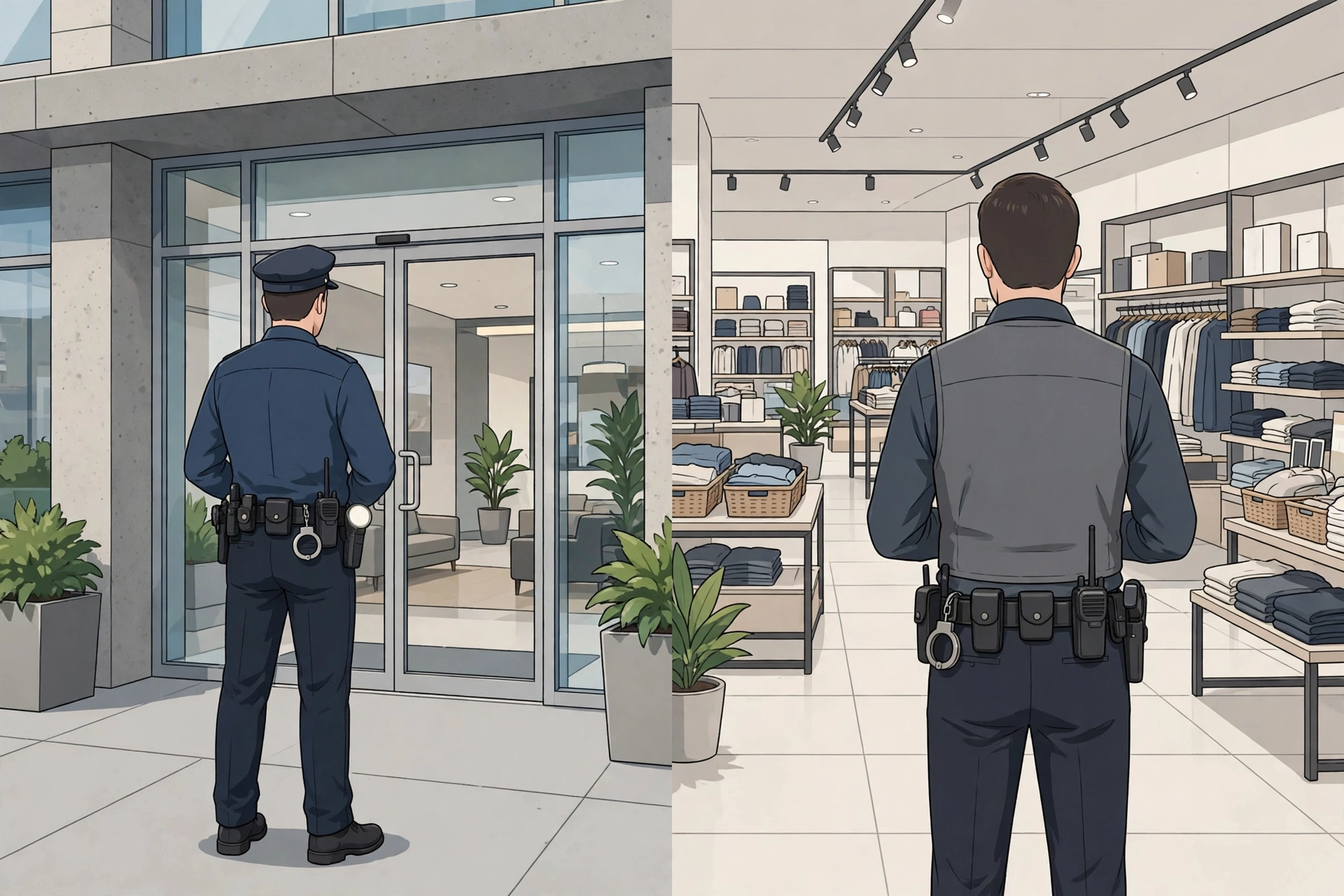
People ask me this often: should I become a security officer, or aim for loss prevention? Both protect people, property, and a business. But the day-to-day work feels very different, and choosing the wrong fit is a fast way to get bored or burned out.
I have worked both sides of this question. I am a Florida Class D and Class G licensed officer, I work in loss prevention, and I came into security from retail operations.
What a security officer does
A security officer is usually the visible presence at a post. The work can include access control, foot patrols, observing and reporting, responding to incidents, and helping visitors and staff stay safe. Posts vary widely: a gatehouse, a hospital, a residential community, a warehouse, or a commercial building. Ask about the post itself, not just the company name.
What a loss prevention officer does
A loss prevention officer works inside a retail business, focused on reducing loss. That means watching the sales floor, reviewing incidents, writing clear reports, and helping store teams spot patterns. It is less about standing at a door and more about observation, documentation, and teamwork. Retail experience helps, and patience matters, because much of the work is careful watching and accurate reporting.
The license starting point
In Florida, security officer work is licensed under Chapter 493 of the Florida Statutes, through the Florida Department of Agriculture and Consumer Services. A Class D license is for unarmed security work and requires 40 hours of training at a licensed school. Armed work needs a Class G firearms license on top of an active Class D, with 28 hours of firearms training. Check each posting's requirements before you apply.
Which path fits you?
Ask three honest questions. Do you prefer a defined post, or a retail floor where the work changes with the store? Are you strongest at visible presence and direct public contact, or at quiet observation and detailed reports? Do you want to stay in one kind of site, or learn how a business loses money and how to stop it? Structure and public contact point to security work; retail, observation, and close store teamwork point to loss prevention.
The takeaway
Pick the daily work, not just the job title. Security officer work centers on a post, presence, and response. Loss prevention centers on a store, observation, and loss reduction. Match the daily work to what you do well, get the license that post requires, and build your record one clear report at a time.
If you are weighing a career move, a general guide to security careers can help you compare roles before you commit: security officer career guides on Amazon. Disclosure: As an Amazon Associate I earn from qualifying purchases.
See also my guide on what a loss prevention officer actually does daily. If this post helped you, follow my work here on toukirislam.com or reach me through the contact section on the homepage.
Sources
FDACS — Class D Security Officer License Requirements
Florida Statutes, Chapter 493 — Private Investigative, Private Security, and Repossession Services
Florida Security License Guide — Class D 40 hours, Class G 28 hours
By Toukir Islam, Florida Class D and Class G licensed security officer and loss prevention officer in West Palm Beach, Florida.