October 31, 2026
UK Halloween Shoplifting Is Forecast to Surge 150%
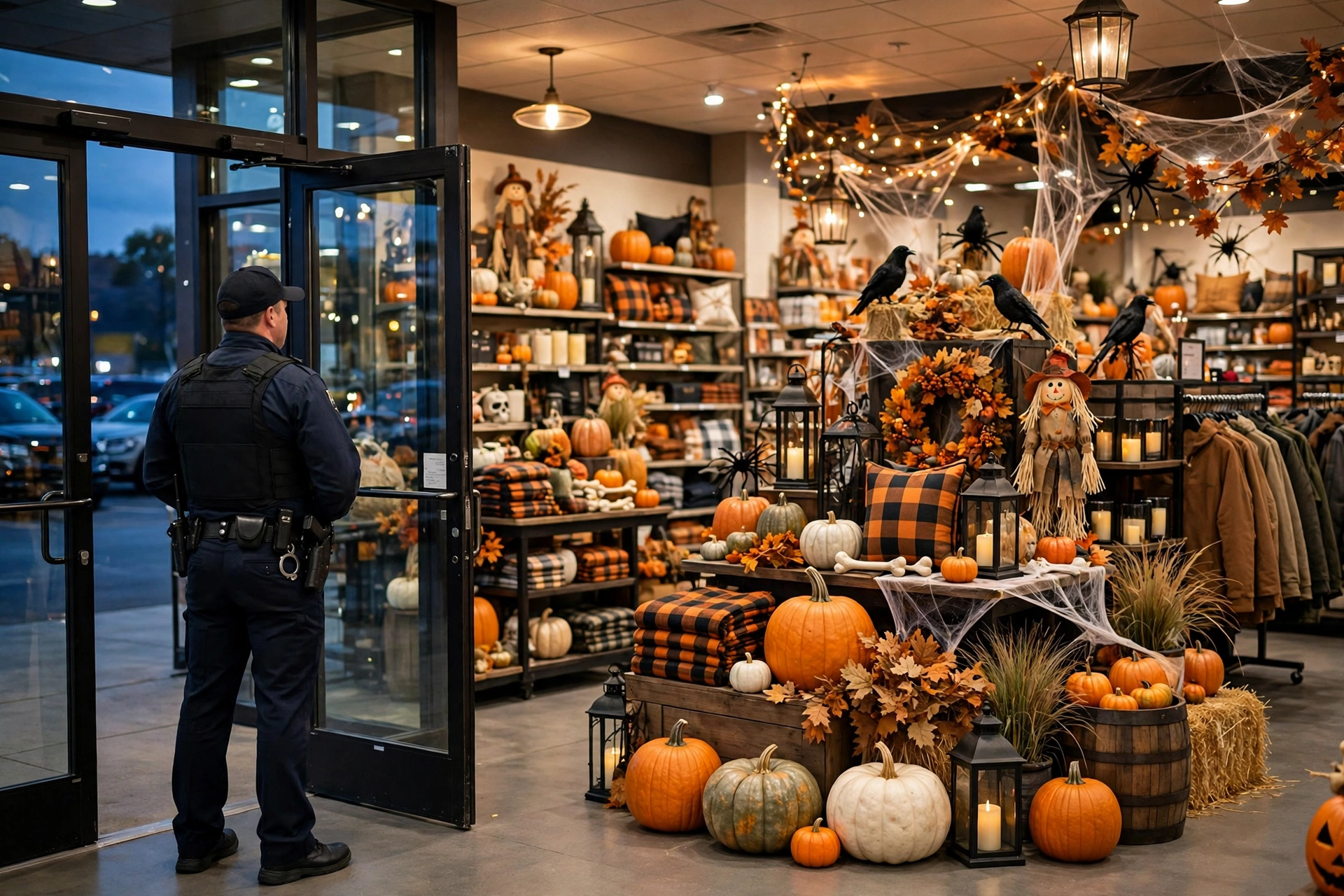
Today is Halloween, and for retail security teams it is not just a holiday. It is one of the busiest and most demanding days of the year. A new forecast from SAI, a retail intelligence company, warns that shoplifting could surge by 150 percent year-on-year this Halloween. That number comes from the United Kingdom, and it is a forecast, not a final count. Still, any loss prevention officer who has worked a busy seasonal Saturday will recognise the pattern behind it: more shoppers, fuller stores, stretched staff, and more chances for theft to go unnoticed.
Read a forecast like this the same way you would read a weather warning. Do not panic, and do not ignore it either. Check what is driving the number, what kind of incidents are expected, and what a store team can actually do about it today, with the people and tools it already has. That is the practical way to use a forecast. It is not about fear. It is about preparation.
What the forecast actually says
SAI published its Halloween analysis on October 26, 2026. Its SAI One Platform draws on insight from more than 1,000 UK retail locations and inputs from over 30,000 cameras every day. That scale matters, because it means the forecast is not based on one store or one town. It is based on a broad view of retail activity across many locations.
Last year, when Halloween fell on Friday, October 31, shoplifting rose by 67 percent above the daily average. This year Halloween falls on a Saturday, which SAI describes as consistently one of the highest-risk days of the week for retail crime. On that basis, SAI forecasts a 150 percent year-on-year rise in shoplifting for Halloween 2026. The report also notes that consumer spending around Halloween is expected to reach 705 million pounds, up 6 percent on 2025, with 46 percent of UK shoppers planning to celebrate, rising to 78 percent among families.
Those spending figures help explain the risk. Halloween is no longer a small seasonal event for retailers. It is, in SAI's words, a gateway to the Golden Quarter, the peak trading period that runs through Christmas. When more people come into stores to buy costumes, candy, decorations, and party supplies, the store gets louder, busier, and harder to watch. That is the environment in which loss prevention work gets harder, and in which good planning matters most.
Why a Saturday changes the picture
A Saturday store is different from a weekday store. Families shop together. Children are in the aisles. Staff are serving more customers at once, restocking seasonal displays, and answering questions. Checkout lines grow. Entrances and exits see steady traffic. For a security or loss prevention officer, the job is not to watch one person. It is to keep an eye on the whole floor while staying ready to respond to a real incident.
Read a forecast like this as a warning about pressure on the whole store, not as a prediction about one kind of thief. When colleagues are focused on serving busier stores, as SAI puts it, there are simply more moments when a theft can happen without being seen. The answer is not to suspect every shopper. The answer is to organise the floor better, so that honest shoppers get good service and suspicious activity is noticed early.
The three patterns in the forecast
SAI expects partial payment to make up the majority of Halloween shoplifting attempts, at 58 percent. In plain terms, that means a customer pays for part of a basket while intentionally leaving other items unpaid. Next comes grab-and-go theft, at 33 percent, where items are taken quickly and the person leaves. Item switching at self-checkout, where a shopper selects a lower-priced product in place of a higher-value item, is expected to account for 8 percent.
This post is not a manual for how those methods work. The loss prevention side of the counter is about helping stores spot problems early and respond safely. What matters for a store team is that these three patterns point to three different pressure points. Partial payment points to the checkout. Grab-and-go points to entrances, exits, and high-value goods near the door. Item switching points to self-checkout supervision and price checks. If a store only strengthens one of those areas, the other two stay exposed.
That breakdown also explains why a single solution rarely fixes seasonal theft. A camera alone does not solve a checkout problem. A guard at the door alone does not solve a self-checkout problem. A sign alone does not solve any of them. Loss prevention works when staffing, store layout, checkout support, and incident reporting work together, and when every team member knows what to watch for and who to tell.
What a good Halloween shift looks like
A strong Halloween shift starts before the doors open. Managers should walk the floor and check the seasonal displays. Are high-value seasonal items placed where staff can see them? Are entrances and exits clear, so staff have a good view of who is coming and going? Are self-checkout areas staffed, especially during the busiest hours? These are simple questions, but they prevent a lot of problems later in the day.
Staffing is the next decision. Halloween is not the day to leave a post uncovered because someone called out and nobody adjusted the plan. If a store is short-staffed, managers should say so openly and shift coverage to the highest-risk times and areas, rather than pretending every area is covered equally. A clear plan beats a perfect plan that nobody follows. Every officer and associate should know their post, their backup, and how to call for help.
Communication matters just as much as coverage. When an officer sees something unusual, the report needs to reach the right person quickly and clearly. That means describing what was seen, where it happened, and when, without guessing at motive or adding details that were not observed. Good reports protect the store, protect honest customers, and give management and law enforcement something they can actually use. A vague report helps nobody.
Staff safety comes first, always. No item is worth a confrontation that puts an employee or a customer at risk. Officers and store teams should follow their company's policy on apprehension and intervention, and they should never chase a suspect into a parking lot or a road if that creates danger. The goal on a busy holiday is to keep people safe, reduce loss where it can be reduced safely, and document what happened accurately.
What this means beyond Halloween
SAI's outlook does not stop at Halloween. Looking ahead to the rest of the Golden Quarter, it forecasts that Super Saturday, December 19, the last Saturday before Christmas and often one of the busiest in-store trading days of the festive season, will be the biggest day for retail crime, with shoplifting expected to surge by 66 percent year-on-year. That gives stores a clear timeline. Halloween is the early test. The lessons learned this weekend should be written down, reviewed, and used to plan for December, when crowds and pressure will be even greater.
For officers and managers, that means treating today as practice for the peak season, not just as a single hard day to get through. What worked? Which hours were hardest to cover? Which checkout or display area needed more attention? Which reports were clear, and which ones were missing key details? Answering those questions on Sunday, while the shift is still fresh, is worth more than any forecast. Forecasts tell you where to look. Your own shift notes tell you what to change.
What shoppers should know
Most shoppers will never be involved in any of this, and they should not feel watched or suspected while they shop for Halloween. Good loss prevention is mostly invisible to honest customers. It looks like a clean store, a staffed checkout, a visible officer at the entrance, and staff who are present and helpful on the floor. If you are shopping today, the best thing you can do is simple: keep your receipt handy, keep bags closed, and ask staff for help if you need it. Those small habits make honest shopping easy to recognise, and they help staff focus on real problems.
Parents shopping with children should also keep an eye on bags and baskets in busy aisles, not because every store is dangerous, but because busy seasonal displays are easy places to lose track of an item. A quick check before checkout saves time and avoids confusion at the till. It also helps staff, who are already managing long lines and seasonal demand.
The takeaway
Halloween 2026 is forecast to be a high-risk day for retail theft, with shoplifting up 150 percent year-on-year in the UK, driven by a busy Saturday, heavy seasonal spending, and pressure on store teams. The forecast is a warning, not a verdict. Stores that plan their coverage, staff their checkouts and self-checkout areas, communicate clearly, and put safety first will handle the day far better than stores that simply hope for a quiet shift. As SAI's Clare Hoole put it, retailers need intelligence that lets them “intervene before losses occur.” That is the job, in one sentence: see the problem early, respond safely, and learn from the shift so December goes better.
If you run a store or work in loss prevention, a visible security camera system is one part of that coverage: security cameras for retail stores on Amazon. Disclosure: As an Amazon Associate I earn from qualifying purchases.
See also the guide on holiday retail theft prevention. If this post helped you, follow Toukir Islam's work here on toukirislam.com or reach him through the contact section on the homepage.
Sources
Retail Rewired — The Retail Recap, October 30, 2026 (corroborating the SAI Halloween forecast)
By Toukir Islam, Florida Class D and Class G licensed Security Officer with Allied Universal in West Palm Beach, Florida.