October 25, 2026
AI-Generated Video Loses Nikon Science Contest Title
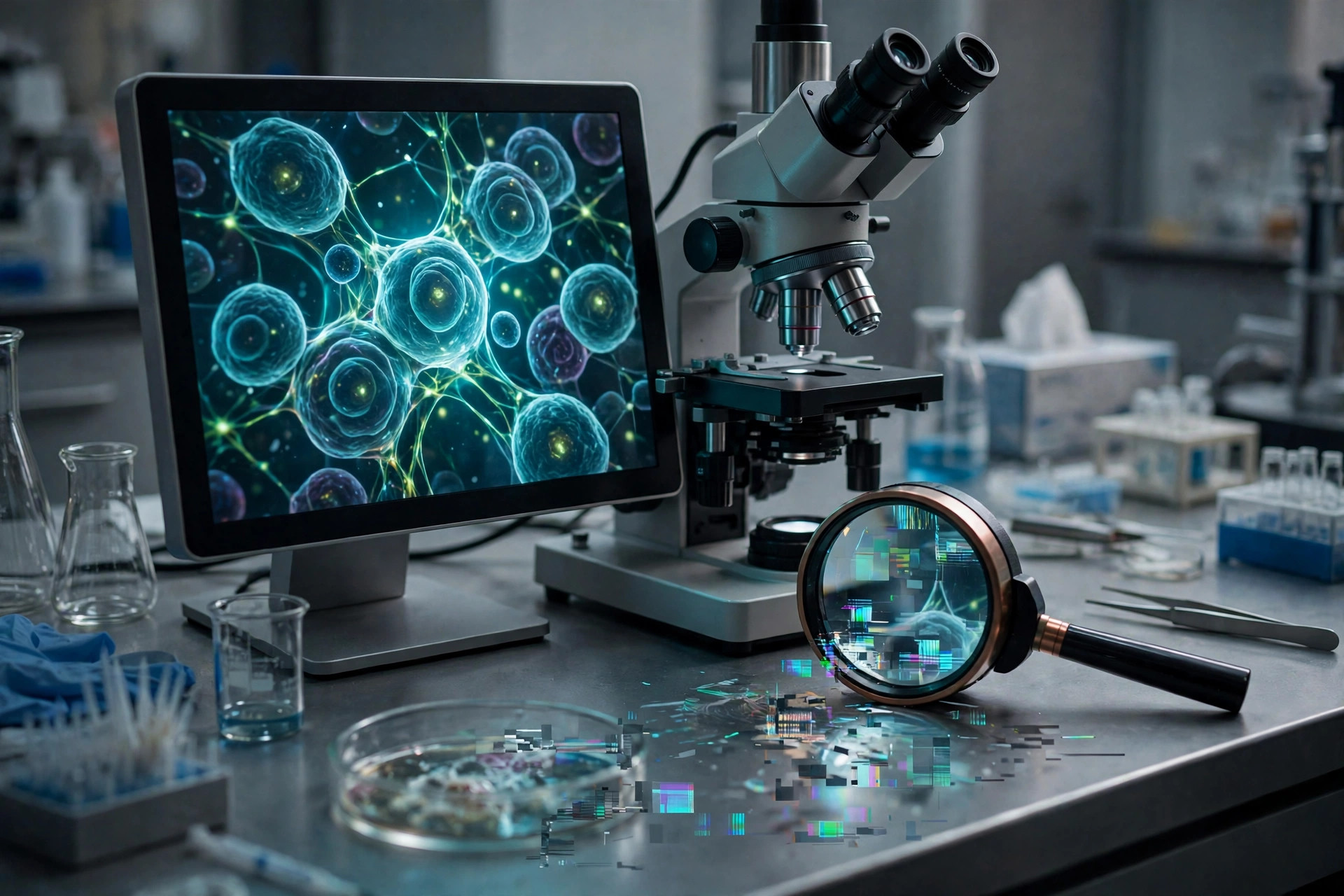
The winner of one of the world's most respected scientific photography contests has lost his title — because his entry was made with AI. Nikon's Small World in Motion competition, which honors movies and time-lapse photography taken through a microscope, stripped this year's top prize from Dr. Ning Xu of Tsinghua University after an investigation found he had broken the contest rules.
Xu's video showed tiny cilia beating in a child's airways. It won — until scientists looked closely.
How researchers spotted the fake
Researchers said the cells had abnormalities in structure and size, and features that appeared and disappeared in ways real cellular biology does not allow. An associate professor at the University of Florida said some structures "pop in and out of existence" and the cilia "appear from nowhere" — classic signs of AI-generated video.
The most damaging find came from a PhD student at UT Southwestern Medical Center, who said the source image carried a distinctive watermark indicating it had been AI-generated. Two former competition judges also raised concerns. Xu later admitted in a since-deleted LinkedIn post that he had used AI, but said it was only to clarify features in reconstructed grayscale images — not to generate the video itself.
The "just enhancement" defense did not hold
Enhancing microscopic structures is common and allowed — researchers typically do it with stains and dyes applied to the sample itself. But Xu's explanation did not account for the abnormalities found, and he did not share the raw grayscale video that could have cleared the doubts. Nikon concluded the rules had been violated, and the top spot went to Nguyen Nam Nhat of Vietnam.
Why this matters beyond photography
This is a verification story, and verification is the core of security work. Whether you are checking an ID at a gate, reviewing camera footage after an incident, or deciding whether a message from a "supervisor" is real, the skill is the same: look past the surface, check the raw source, and do not accept a polished product at face value.
AI tools now make convincing images and video cheap, so "it looks real, so it is real" is finished as a standard. The researchers who caught this needed only attention to detail and the willingness to say, "this does not look right," out loud.
The takeaway
Trust, but verify the original. A polished result proves nothing on its own. When something matters — a contest entry, a credential, a piece of evidence — go back to the raw source before you accept it.
Source: TechSpot — Nikon photography contest winner loses title after scientists spot telltale signs of AI-generated footage (October 12, 2026). Contest details: Nikon Small World.
Want to sharpen the same verification habit for everyday scams? Read my 60-second phishing checklist — it works on messages the same way scientists worked on this video.
Follow along at toukirislam.com for more security and tech news with a professional's take — or reach me through the contact section on the homepage.