2026-10-24
Can a Class D License Work Armed Security in Florida?
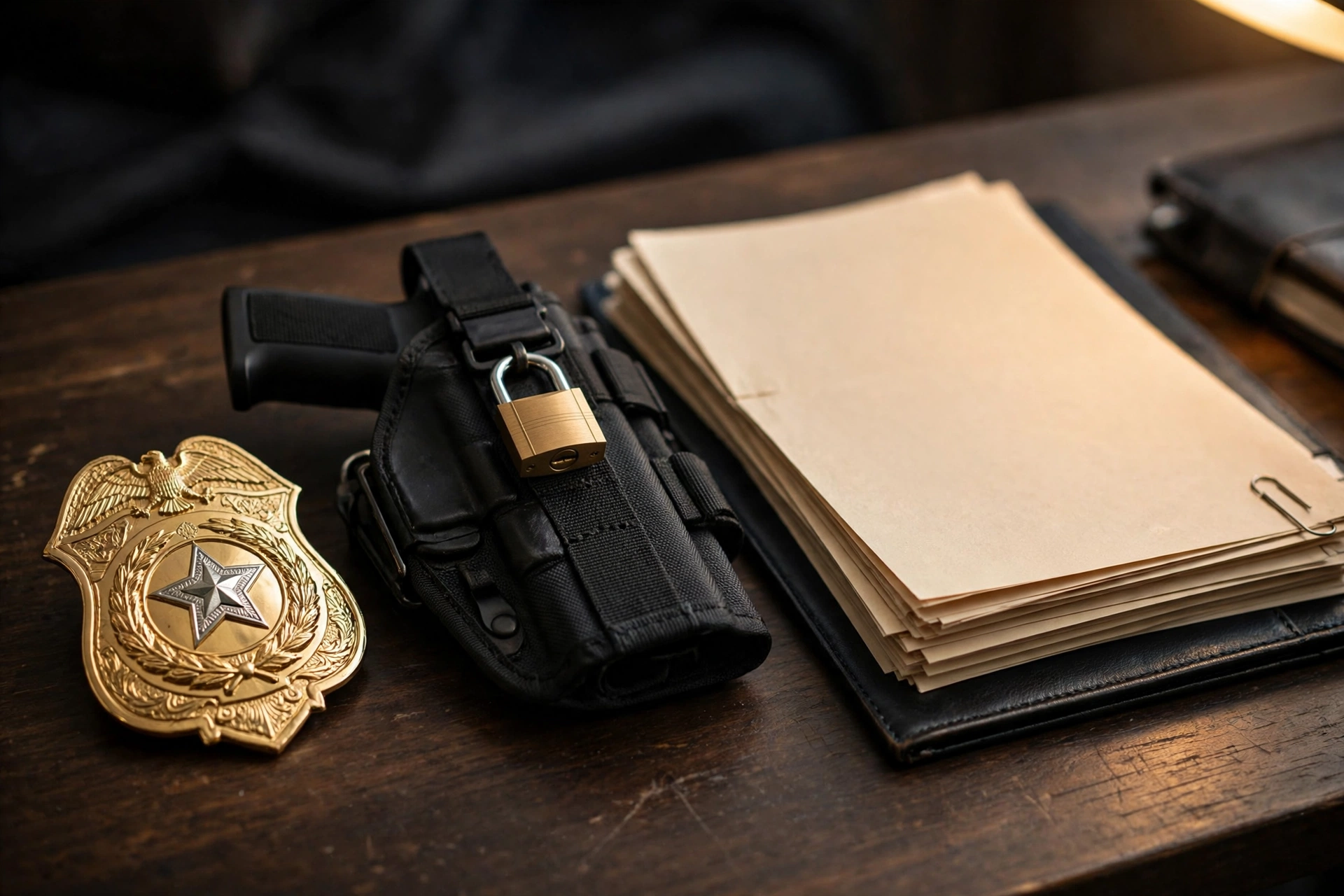
Myth: "Once I have my Florida Class D security license, I can take armed posts — a security license is a security license."
Fact: No. The Class D is an unarmed license. FDACS is unambiguous: any individual who performs the services of a security officer must have a Class "D" license — and to carry a firearm in the performance of security duties, a security officer must obtain a Class "G" Statewide Firearm License. One does not substitute for the other.
Why so many officers get this wrong
Both licenses come from the same agency — the Florida Department of Agriculture and Consumer Services, under Chapter 493 of the Florida Statutes — so it feels like one security license. It is not. The Class D covers everything you do unarmed: patrol, access control, reporting, de-escalation. The Class G is a firearm endorsement that sits on top of an existing license. Florida's own guidance says only holders of a Class C, CC, D, M, MA, or MB license may bear a firearm in regulated work — and every one of them must also hold a Class G. Work an armed post on your D alone and you are carrying without the license the law requires.
One more trap: your personal concealed-carry permit does not cover you on duty. The Class G is the only license that authorizes a firearm in the performance of security work.
What the Class G actually takes
I hold both licenses, so here is the honest version. After the 40-hour Class D course, the Class G adds a 28-hour firearms course taught by an FDACS-licensed Class K firearms instructor — legal aspects, safe handling and marksmanship, and a scored range qualification with the exact type and caliber you will carry. Then you requalify on the range every year to keep it. Armed posts pay better — I broke down exactly how Florida officers reach $30 an hour in a previous post — but the G is a commitment, not a shortcut.
The takeaway
Your license defines your ceiling. If armed posts, hotel details, or executive protection are in your future, budget for the Class G from day one instead of treating it as a problem for later. The officers I watch move up fastest are the ones who understood this before they finished their Class D course.
If you are starting from zero, my step-by-step Florida licensing guide walks through the Class D side first — then the Class G upgrade.
Sources
- FDACS — Class "D" Security Officer License Requirements: "Any individual who performs the services of a security officer must have a Class 'D' license."
- FDACS — Private Security Licenses: "To carry a firearm in the performance of security duties, a security officer or security agency manager must obtain a Class 'G' Statewide Firearm License."
- FDACS — Class "G" Statewide Firearm License Requirements: "Only Class 'C,' Class 'CC,' Class 'D,' Class 'M,' Class 'MA' and Class 'MB' licensees are permitted to bear a firearm, and any such licensee who bears a firearm must also have a Class 'G' license."
- LegalClarity — How to Become an Armed Security Guard in Florida: 40-hour Class D course plus 28-hour Class G firearms course (citing FDACS requirements).
Have a licensing question for me? Contact me through toukirislam.com — and follow my Security Talk posts for weekly security career guidance.